
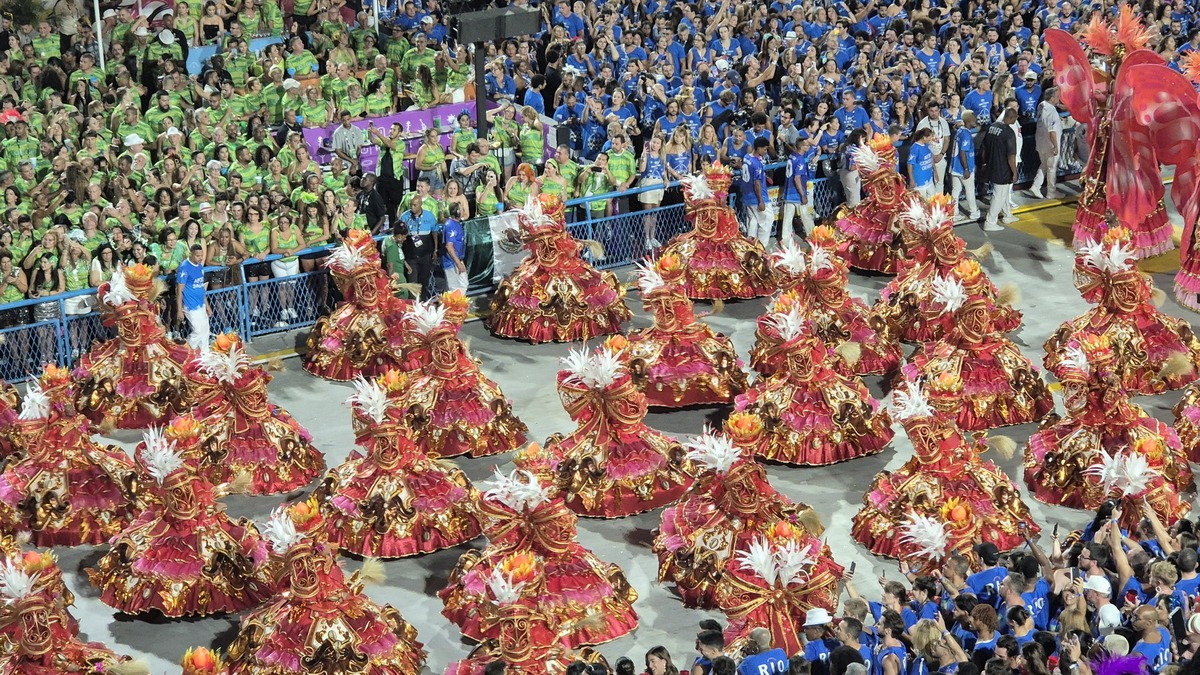
Every year in late February people from all across the world flood the streets of Rio de Janeiro to be at the epicentre of what may well be the greatest party known to humankind. Intoxicating samba rhythms everywhere – check. Funky outfits – check. Ice cold caipirinhas in the scorching sun – check. Tons of glitter – a must. Welcome to Carnival!
Nothing prepares you for the beauty and the madness of stepping outside your hotel on the first day of Carnival. Your senses are dazzled as you take in the scene. Everyone has swapped conventional clothing for costumes of their favourite characters, sparkly skirts, rainbow capes, and feathered headbands. Elaborate make-up and glitter are the norm, while music and laughter fill the air.
As you watch Mario and Spiderman fade into the colourful crowd together, the excitement becomes contagious. For one week, people seem to put their worries on the backburner and let their inner child out. Imagination, fantasy, dance, and play are at the centre of the celebrations, something I think we could all use more of in our lives. Maybe this is why Carnival is so compelling – it’s a reconnection to the child-like spirit we have learned to bury deep inside ourselves to make space for the ‘serious’ adult.
There are two sides to Carnival – the countless street parties or blocos, and the official parades at the Sambadrome where the top samba schools in Rio compete to be crowned the year’s winner. Each with its unique charm, but both rooted in the same joyful Carioca spirit.
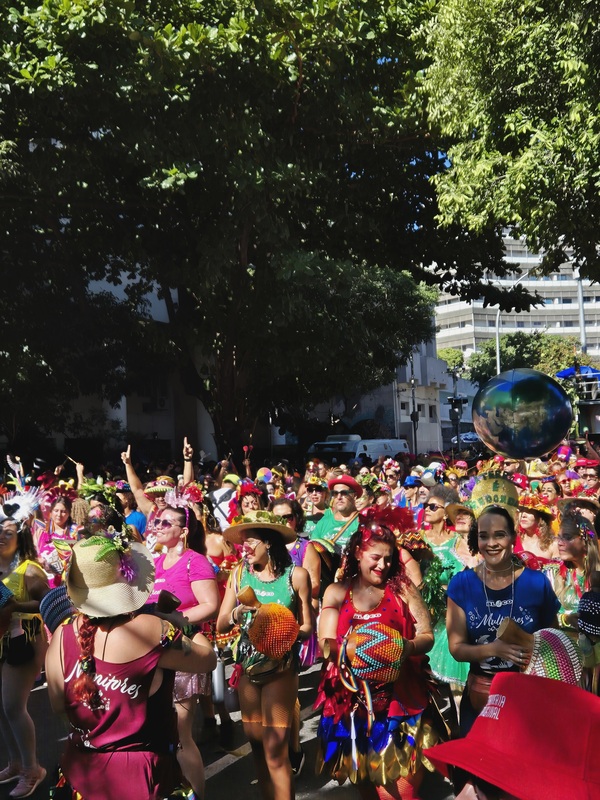
Each Carnival season, blocos become the beating heart of Rio, transforming the whole city into the biggest outdoor party in the world. With hundreds to choose from, approximately 2 million people take to the streets each day to dance and celebrate life together. Whether you’re a morning person or a night owl, a techno lover ready to rave or someone who prefers to boogie to old-school rhythms, Rio is bound to provide a bloco that speaks to your soul.
One of my favourite memories of Carnival is perusing the narrow streets of Lapa with no particular aim but to take in the vibrant atmosphere, the laughter, the colours, the sometimes conflicting rhythms coming from all around. Following one stream of music, we found a giant speaker installed at an intersection, people converging to dance to the latest pop hits. The simplicity of the set up struck me, the serendipity of strangers from different walks of life being there together, for a moment or an hour, immersed in the movement and just being themselves. Another stream led us to this incredible band whose intoxicating drumming made it impossible not to join in and move to their beat.
For a more traditional experience, we wanted to catch one of the street bands, so we woke up at the crack of dawn, put the mandatory glitter on, and made our way to the bloco nearby. I never thought I’d go partying at 7AM, but when at Carnival…
Given the early hour, I was expecting this one to be pretty quiet. So it was no small surprise when we turned the corner and I saw hundreds of people blending into a mass of sparkling multi-colour. At the centre of the crowd, a double decker bus carrying the band members who were getting ready to play. Celebration and anticipation filled the air.
The event started with a blessing of incense and holy water followed by the lively presentation of the bloco flag, introducing us to the energy of the hosting community. Once the band got going, hundreds of voices followed, singing along to Brazilian classics, much loved by the locals. Amid the hustle and bustle, the iconic sound of the apito (samba whistle) stands out as it coordinates the countless drums and rattles of the bateria (band) tailing the slow moving bus.
The sheer energy and passion of the band leader is infectious, and despite a lack of morning coffee, dance and delight fill your soul as you sync to the lively samba beats once again…
In contrast to the laid-back and somewhat serendipitous nature of the blocos, the official parades at the Sapucai Sambadrome impress through their sheer grandeur. The competing samba schools are rooted in the same community spirit as the street blocos they evolved from, but, over the years, they have become massive undertakings.
Each school chooses a theme for the year that serves as the cohesive glue for their performance, particularly emphasised by the enredo (theme song). For 70 to 80 minutes, thousands of performers coordinate to bring the theme to life through powerful percussion, complex choreographies, extravagant costumes, gigantic floats – one more elaborate than the other, and of course, a seemingly inexhaustible supply of energy and passion. The processions must follow a predetermined structure, full of meaning and symbolism, and the judges assess the performances on a diverse set of criteria, ranging from theme choice and cohesion to strict time keeping.
During our stay, we went to see the second night of presentations from the Special Group (comprised of Rio’s top samba schools), which included the 2025 eventual winner – Beija-Flor. Despite briefly researching what to expect from the parades, nothing prepared me for the incredible scale of the experience.
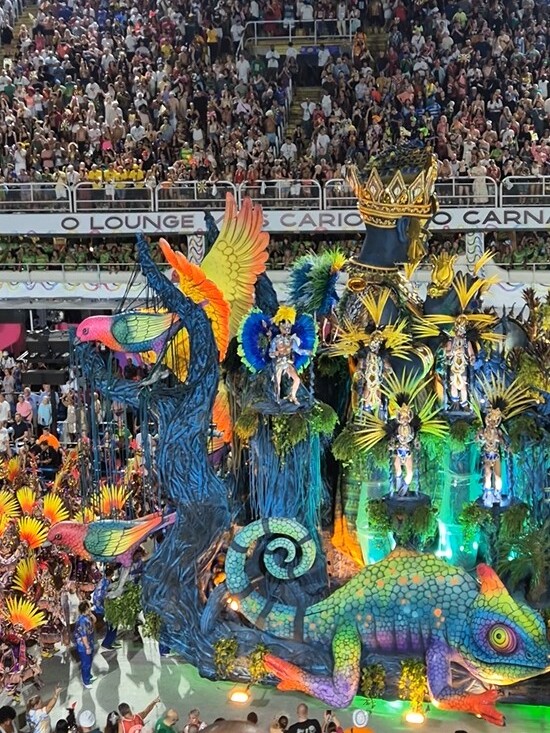
As fireworks lit the night sky and the first school took to the avenue, the explosion of sound, movement, colours, and extasy that followed was in all honesty quite overwhelming, in the best way possible. The energy was contagious, and next thing we know, we were joining in with the locals all around in the stands, dancing and singing, even though we had no clue what the lyrics were. For hours on end, tens of thousands of people were in unison with each other, fostering a strong sense of cheerful unity that I haven’t experienced anywhere else.
It was not just my senses that strived to take the performance in. My mind was also grappling to make sense of its magnitude. I vividly remember thinking, as the third massive float came into sight with tens of dancers scattered atop it, that this can’t possibly be still the same samba school as the one that started.
Little did I know they weren’t even halfway through their presentation…
The Sambadrome experience is a marathon, not a sprint, lasting until the early hours of the morning and it’s best to go prepared with plenty of snacks and water to keep you fuelled throughout the night. The Special Group evenings consist of 4 samba school parades, and each group is allowed to take up to 80 minutes to traverse the 700m avenue. Thankfully, there is a 20 minute break in-between parades, so that everyone can get a short respite and gather their energy for the next performance.
The incredible atmosphere at the Sambadrome will truly stay in my heart for the rest of my life. It’s hard to find words to describe the full extent of the magic that happens there, so I leave the medley of videos to speak for itself.
When you think of Carnival, the first thing that comes to mind might be the lively music, the colourful costumes, the display of fantasy. But beneath the glitz and glam, the soul of Rio’s Carnival lies with its people and their willingness to celebrate life, to choose joy – só alegria. This spirit permeates Brazilian culture, but it’s even more amplified during Carnival.
Nowhere is that more evident than in the communities that underpin every aspect of the revelry. Whether it’s a small neighbourhood bloco or a massive samba school parade, people clearly take pride in coming together to put on a great party and celebrate with each other. And not only that, but they are also generously open to sharing their traditions and collective joy with all those around them, locals and foreigners alike.
This profound feeling of togetherness, centred around music and dance, encourages people from all walks of life to find happiness in this present moment, right here, right now, imperfect as it may be.
This, in my experience, is the soulful essence that makes Carnival in Rio truly special.
28 February 2025 ➳ 5 March 2025
Leave a Reply